A private sanctuary, kept by the jungle.
On a quiet shoulder of La Digue, where granite boulders rise from the green and the sound of palms is closer than the sound of the sea, Tabu waits. A villa held by the forest. An infinity pool that takes the sky. A jacuzzi that takes the moon. And around it all — silence, kept by the trees.
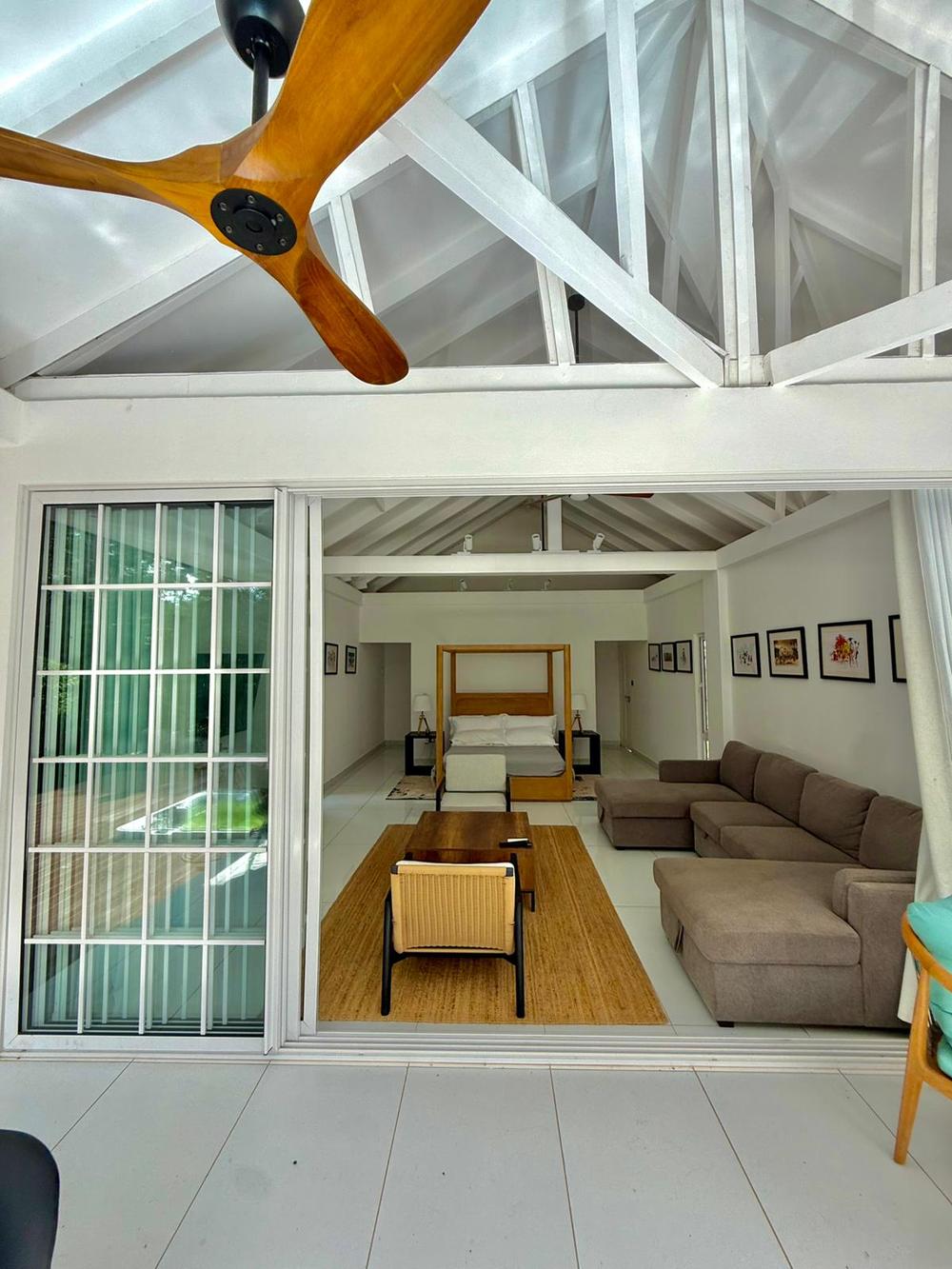
Tabu is built in the language of the islands — teak, takamaka, white timber, and glass — designed so the forest is never quite outside.
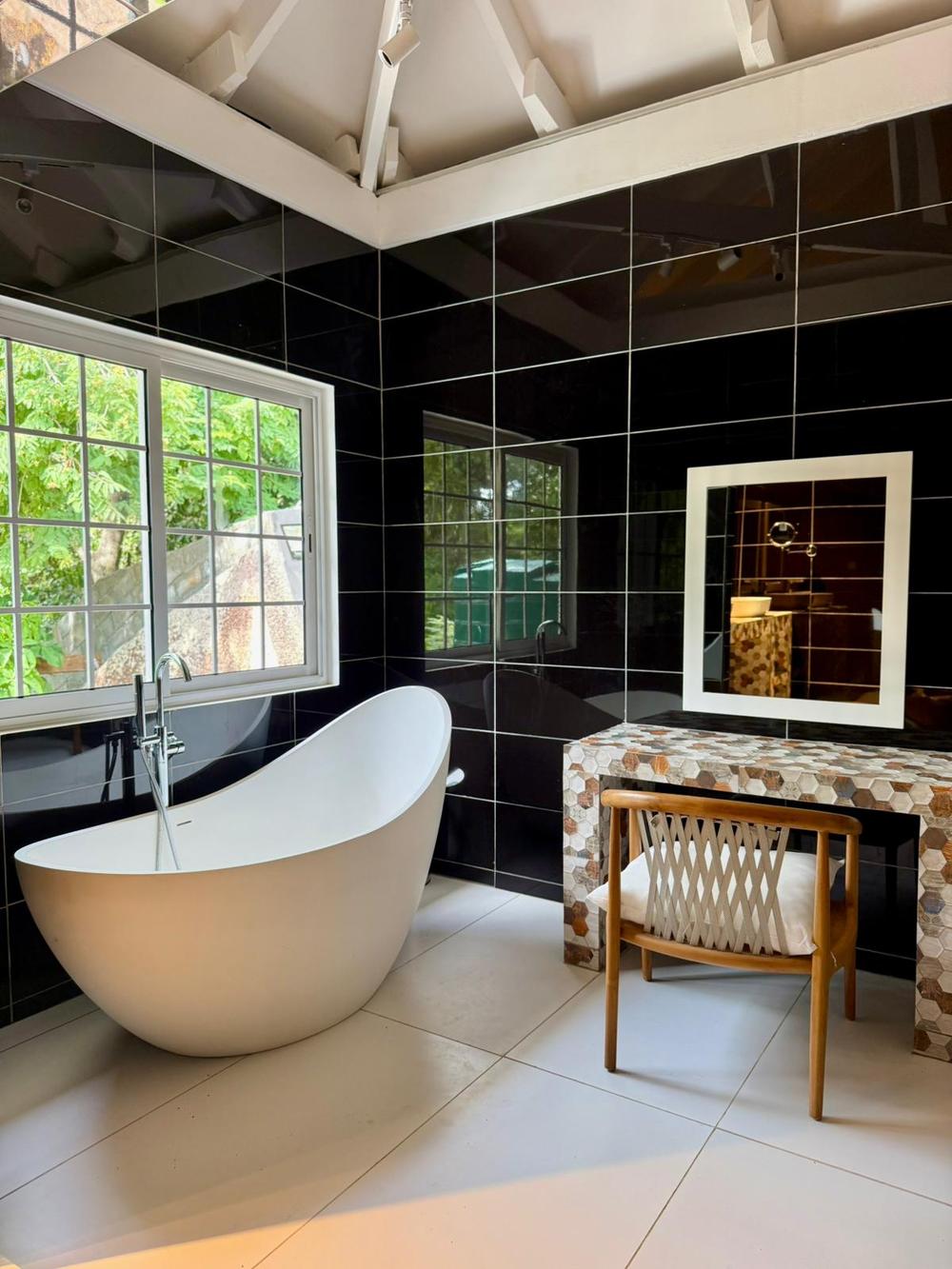
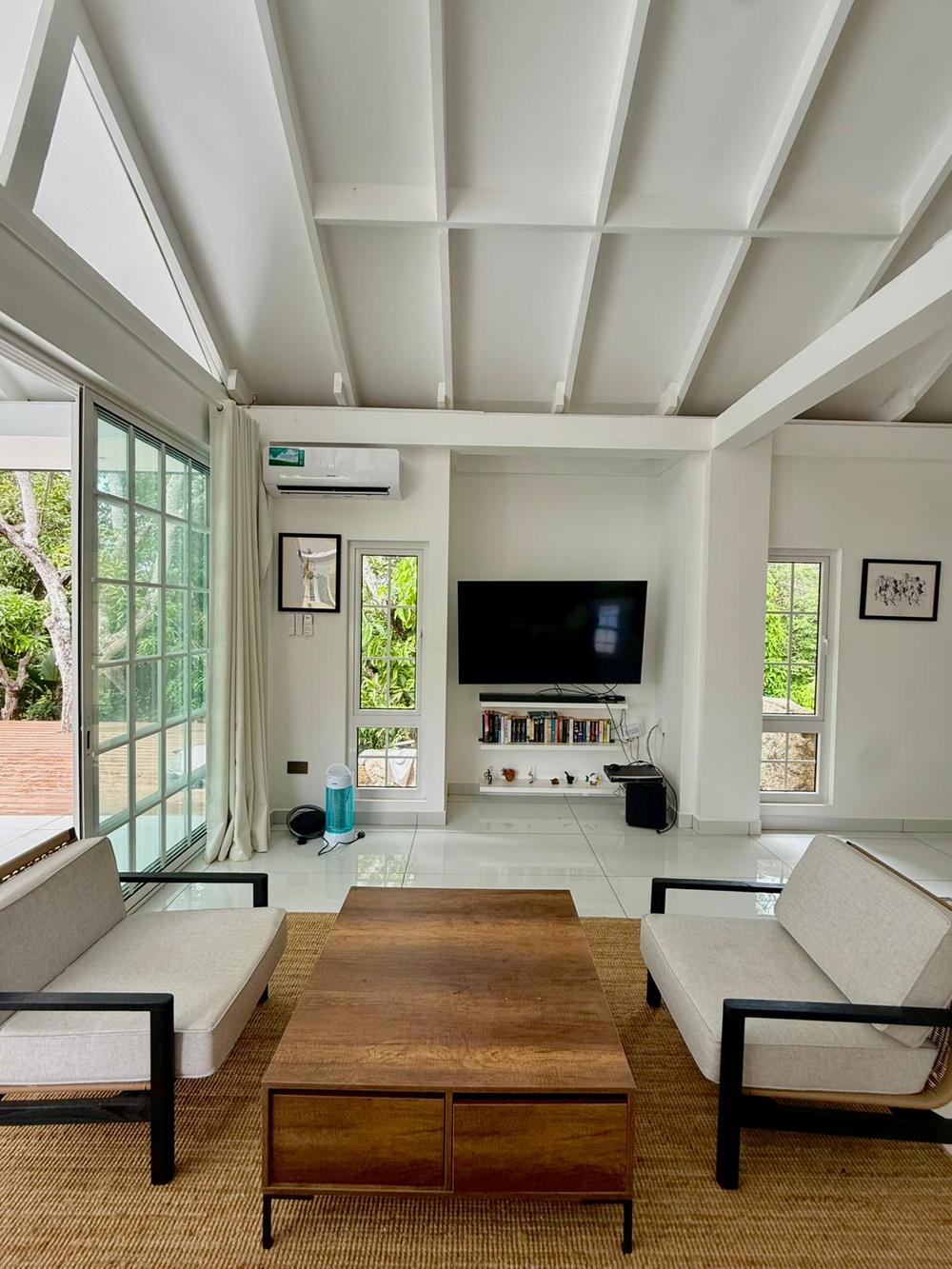
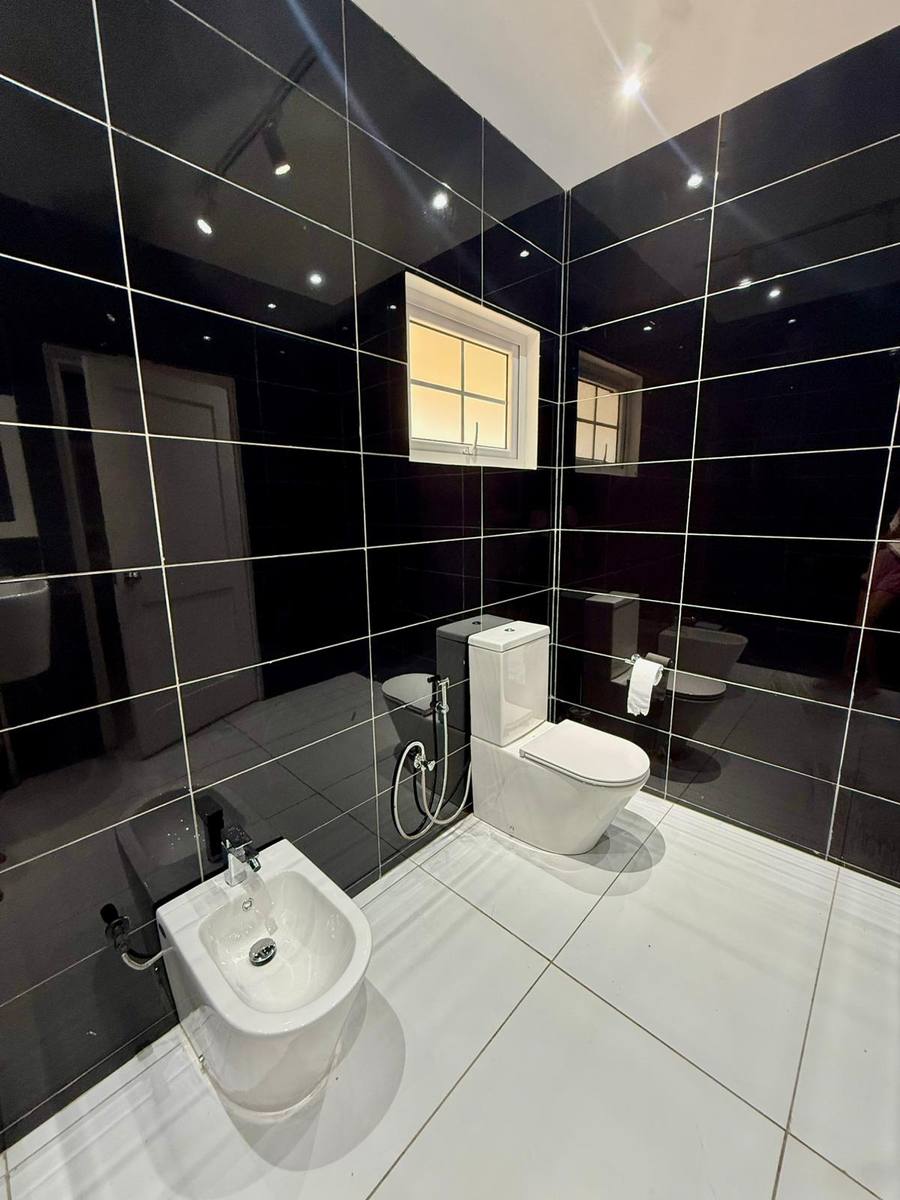
Twin pitched roofs rise above a single open plan: a living pavilion, a master suite with a four-poster carved in teak, a dressing room, and two bathrooms — one in dramatic black tile, one centred on a freestanding bath beneath the windows.
The villa opens onto a deep timber deck which holds the pool on one side and the jacuzzi on the other. Beyond the deck, only granite and green.
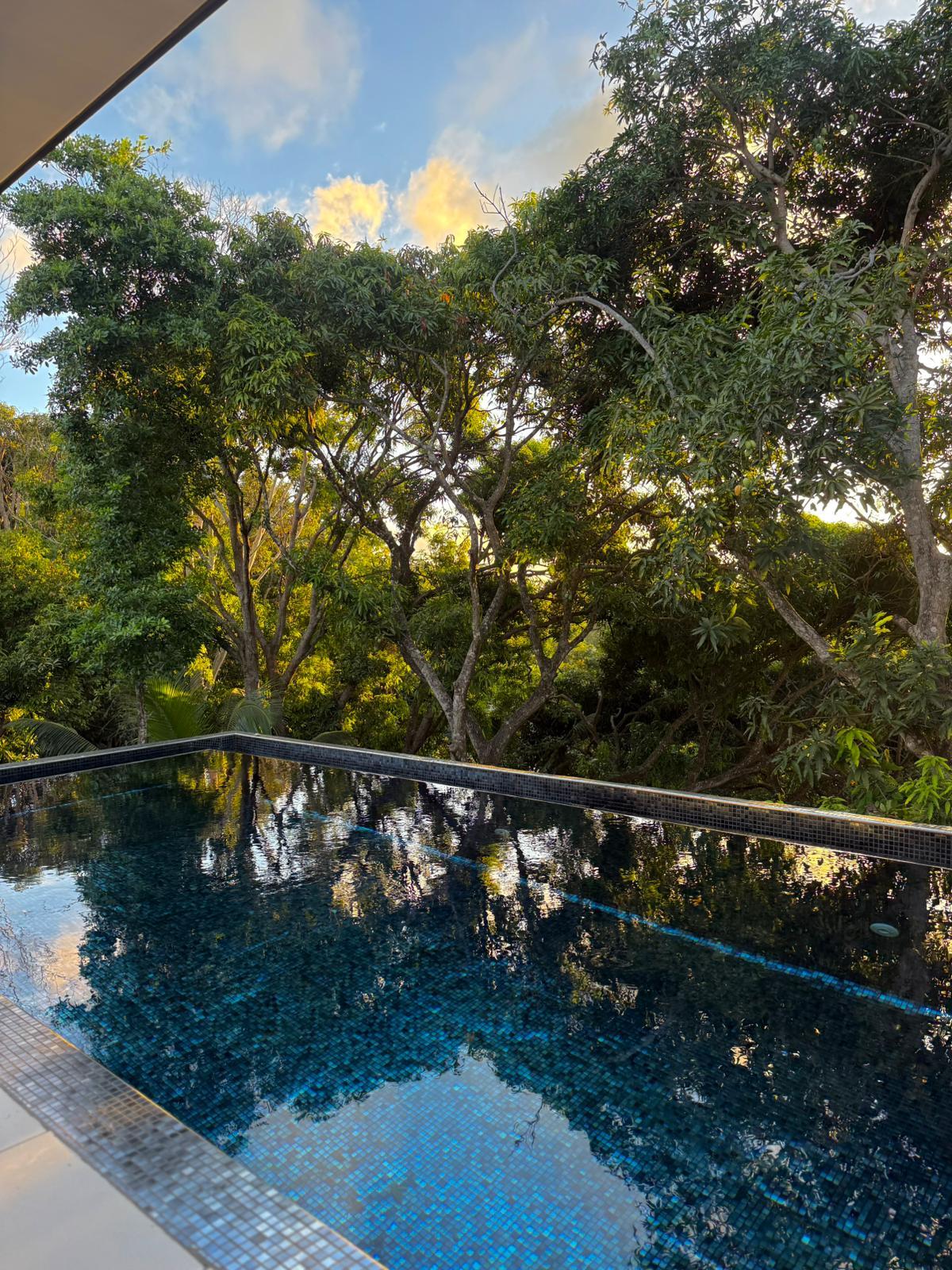
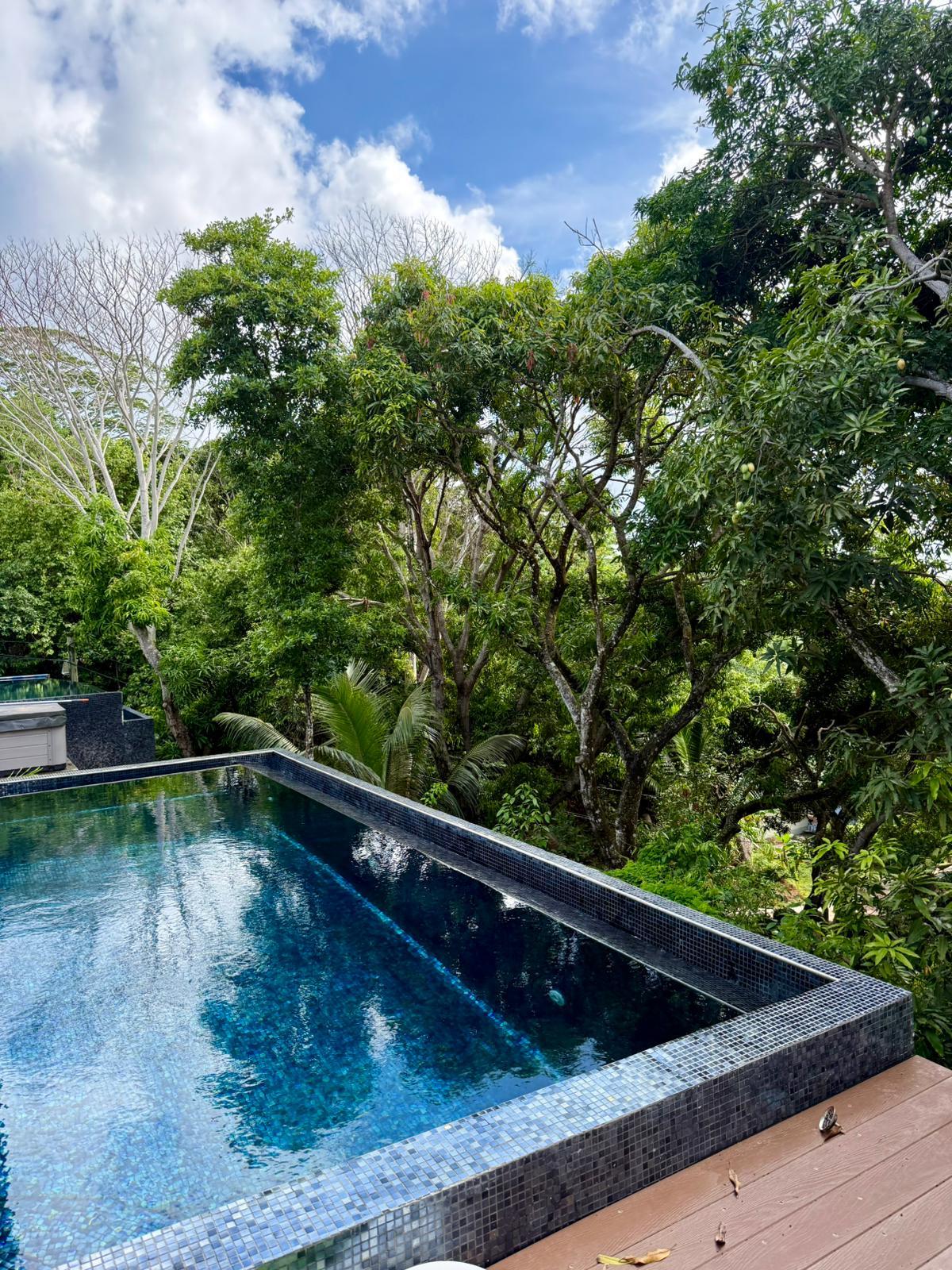
Deep mosaic, mirrored canopy, and a horizon that seems to drop into the trees.
The pool is set into the timber deck and tiled in dark blue glass mosaic. By day it holds the sky; at sunset, the trees come down to swim. There is no one for it to belong to but you.
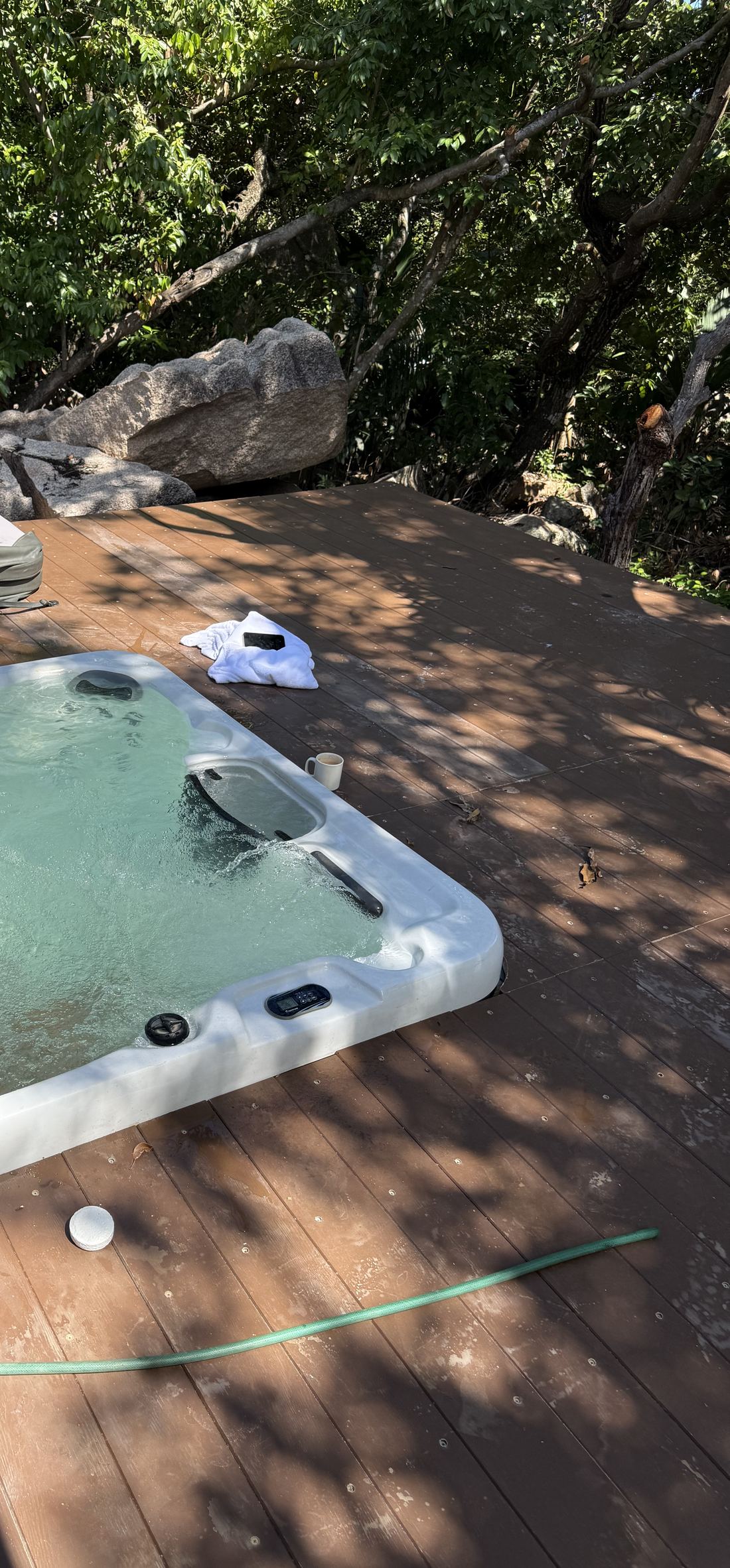
Tucked into the granite, shaded by takamaka, warm at any hour.
Set on the deck where the trees come closest, the jacuzzi is the room you take after the pool — or before sleep. Granite to the back; canopy overhead; the rest of the world somewhere else entirely.
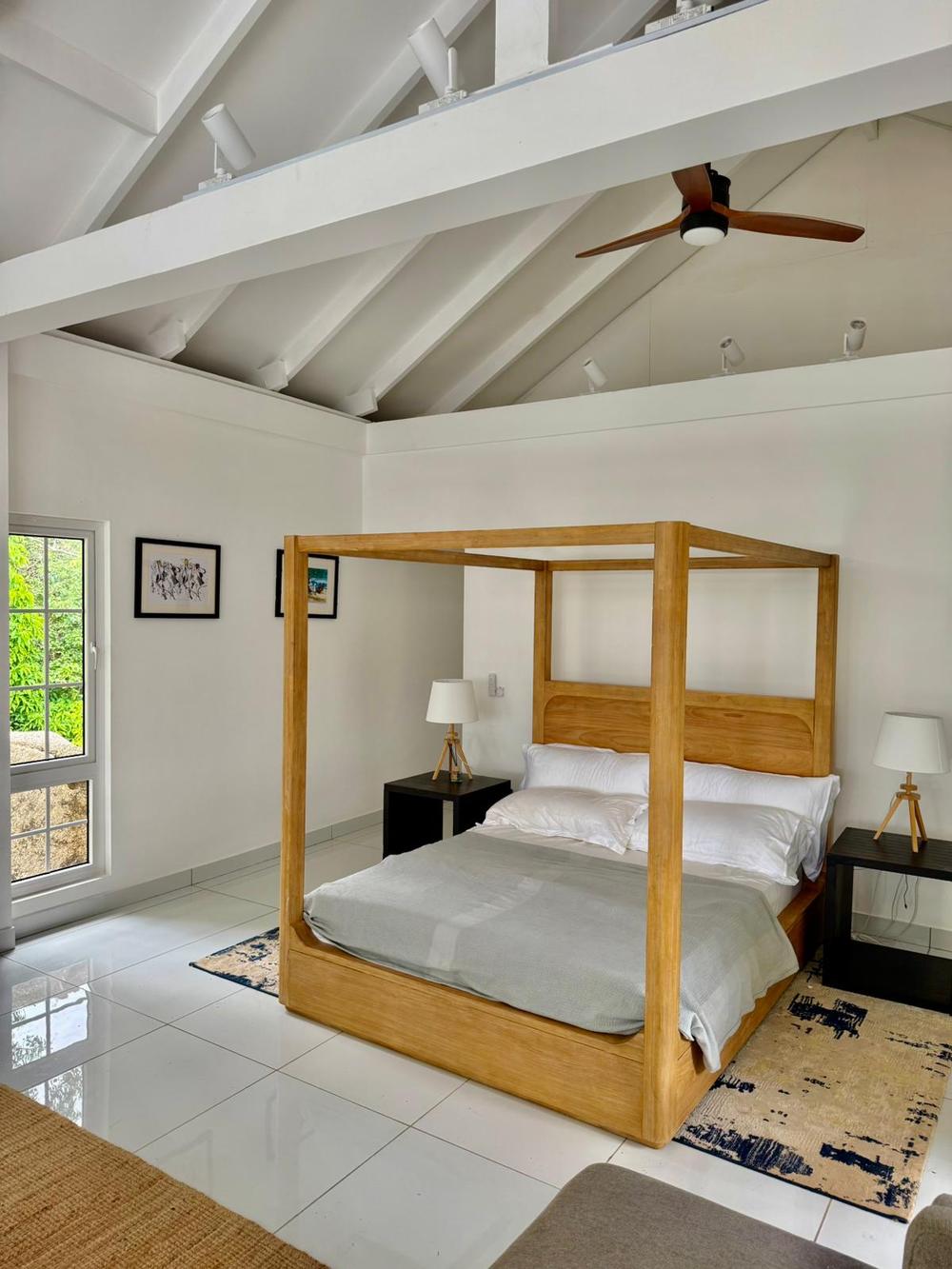
A four-poster of solid teak, beneath the white pitched roof.
The master suite is the architectural heart of Tabu — a cathedral ceiling in white timber, glass on two sides, and a hand-built four-poster of teak at its centre. Linen by the metre; ceiling fan in carved hardwood; a calm so complete it has weight.
Black gloss tile, a freestanding bath, and a window full of leaves.
The master bath is dramatic by design — black to the ceiling, white to the floor, and a single freestanding tub set against the window. Dawn here, with the forest waking, is reason enough to come.
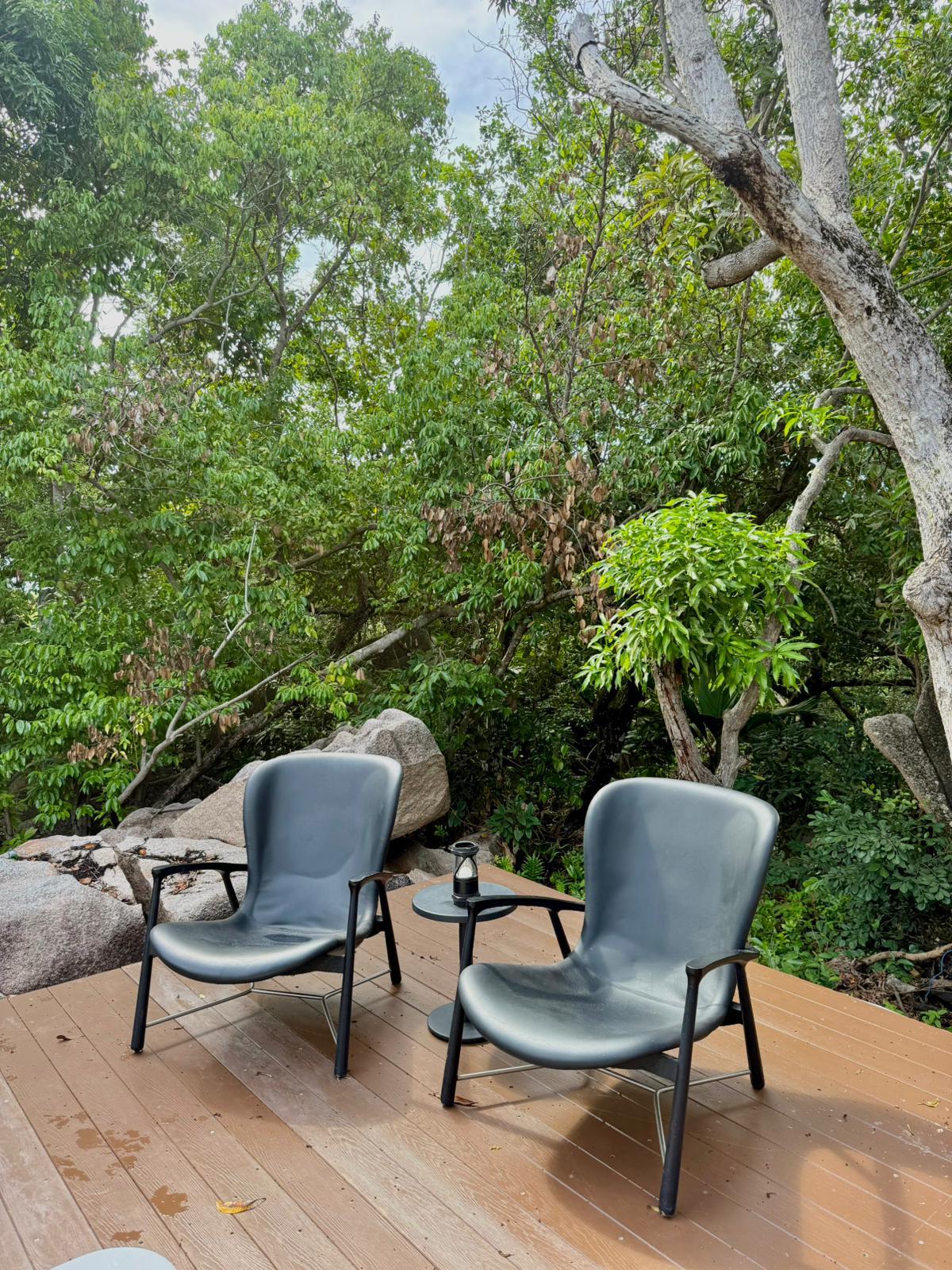
Two chairs, one lantern, and the rest is birdsong.
A second deck — softer, more secluded — sits at the back of the villa, where the takamaka leans in and the granite is closest. A pair of leather chairs and a small lantern; it is the place you find yourself reading, then not reading, then asleep.


La Digue is the smallest of the three principal islands of Seychelles — quieter than Mahé, gentler than Praslin, reached only by ferry. The roads are crushed coral. The transport is the bicycle. There are no traffic lights and there have never been.
Tabu sits ten minutes from Anse Source d'Argent — the most photographed beach in the world — and yet feels nowhere near it. That is by design.
Tabu accepts inquiries by hand. Tell us when, and for how long, and we will write back.